It's 'Just Something My Mom Made': The Quiet Imposter Syndrome Haunting Turkish-American Dessert Makers
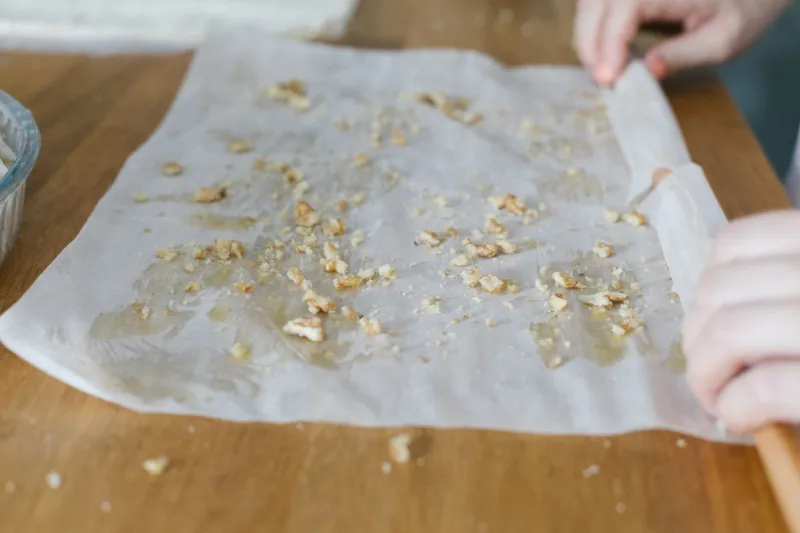
Picture this. A Turkish-American woman — let's call her Ayşe, because there's a solid statistical chance her name actually is Ayşe — has just spent the better part of a Saturday making şekerpare from scratch. She's clarified the butter, made the syrup twice because the first batch wasn't quite right, shaped each little dome by hand, and timed the soak with the kind of precision that would impress a pharmacist. The result is objectively stunning. Golden, glossy, perfectly tender.
Someone at the potluck asks if she baked them herself.
"Oh, these?" she says, already waving her hand. "I just followed what my mom always did. It's not really cooking."
And there it is. The sentence that haunts Turkish-American kitchens from New Jersey to Glendale.
The Myth of 'Not Real Cooking'
There's a specific flavor of self-erasure that runs through diaspora food culture, and Turkish-Americans have developed a particularly concentrated version of it when it comes to desserts. Ask someone to describe making a proper revani and they'll say "you just soak it in syrup." Ask about kazandibi and they'll tell you "it's basically just milk and sugar." Ask about homemade lokum and — well, nobody's making homemade lokum anymore, but if they were, they'd probably describe it as "not that complicated."
The dismissal is almost always automatic. Reflexive. Like a muscle that's been trained since childhood to minimize.
Part of this comes from how the knowledge was transmitted in the first place. Recipes passed down through watching, through standing next to your grandmother and absorbing information without ever writing anything down — that kind of learning doesn't feel like formal culinary training. It feels like just... knowing things. And in American culture, where cooking authority tends to get assigned to people with culinary school credentials, Food Network appearances, or at minimum a popular Instagram account, knowledge that came through your family kitchen can feel unofficial. Like it doesn't fully count.
The Gatekeeping That Contradicts Everything
Here's where it gets interesting, though — and a little funny, honestly. The same person who insists their desserts are "nothing special" will also absolutely not be giving you the full recipe.
Ask for the şekerpare proportions and you'll get a version that's technically correct but missing something. The syrup temperature. The exact moment to pull it from the oven. The specific brand of butter her mother always used that you can only find at one particular Turkish grocery in a specific part of town. These details will not be volunteered. They live in a separate mental category labeled DO NOT DISTRIBUTE.
This is not hypocrisy. Or rather, it's a very understandable kind of hypocrisy. When your cooking knowledge is one of the few remaining threads connecting you to a place and a language and a whole version of yourself that doesn't fully exist in your American daily life, giving it away completely feels like losing something. Even if — especially if — you've convinced yourself it wasn't that valuable to begin with.
The dismissal and the gatekeeping are two sides of the same coin: I don't think this is worth much, but I'm also not letting it go.
Generational Transmission as Invisible Labor
There's a broader pattern here that goes beyond just desserts. Across diaspora communities in the US, knowledge that gets passed down through families — particularly through women, particularly through kitchens — tends to get coded as natural rather than skilled. As instinct rather than expertise. Your teyze doesn't "know how to make aşure," she just makes aşure, the way she makes everything, effortlessly, because that's just who she is.
The labor involved in that knowledge — the years of watching, the failed batches nobody talks about, the adjustments made for American ingredients that don't behave the same way as Turkish ones, the mental effort of translating measurements from "a handful" and "until it looks right" into something reproducible — all of that gets absorbed into the background. It becomes invisible.
And when you've grown up watching someone treat their own expertise as unremarkable, you learn to treat yours the same way.
The American Validation Problem
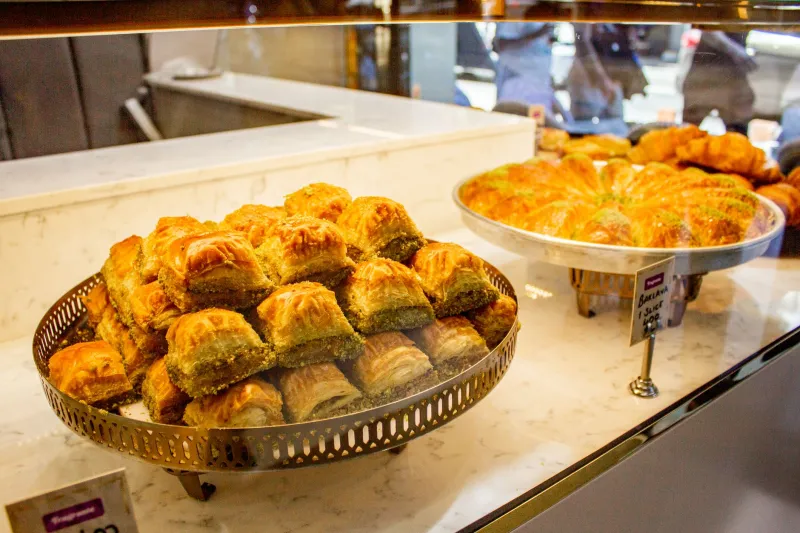
There's also something specific happening at the intersection of Turkish dessert culture and American food trends. American food media has spent years "discovering" cuisines on its own timeline, and Turkish sweets have been caught in an awkward in-between zone. Baklava is familiar enough that Americans recognize it but often associate it with Greek restaurants. Turkish coffee is having a moment, but mostly through the fortune-telling angle. Things like kadayıf, muhallebi, or tahin helvası remain genuinely unknown to most non-Turkish Americans.
When your food doesn't have mainstream American recognition, it's easy to internalize that invisibility as a kind of verdict. If nobody's writing about it in Bon Appétit, if it's not showing up on trendy restaurant menus in Brooklyn, maybe it really isn't that serious.
Except: it is that serious. The technique involved in making a proper tel kadayıf, the patience required for a well-set muhallebi, the timing and temperature control in a good baklava — these are genuinely difficult skills. The fact that they haven't been validated by the American food establishment doesn't change that.
What Would It Look Like to Actually Claim This?
Imagine, for a second, a Turkish-American home cook who responds to the potluck question differently. Who says: "Yes, I made these. It took me most of the day. My grandmother taught me and her mother taught her and the technique goes back further than either of us can trace. They're called şekerpare and they're very good."
That version of the answer feels almost uncomfortable to read, doesn't it? A little too much. Too confident. Not appropriately modest.
Which is exactly the problem.
The discomfort with claiming your own culinary knowledge isn't humility — it's a habit that was never examined. And for a lot of Turkish-Americans, examining it means reckoning with how much cultural value got quietly written off over years of assimilation, of fitting in, of translating yourself for spaces that weren't built with you in mind.
The desserts were never nothing. They were never "just" anything. They were the whole point.
Next time someone asks if you made those cookies, the şekerpare, the baklava, the thing that took you all day and tastes exactly like your childhood: you're allowed to just say yes.