Crack, Spit, Repeat: How Çekirdek Became the Secret Handshake of Turkish-Americans
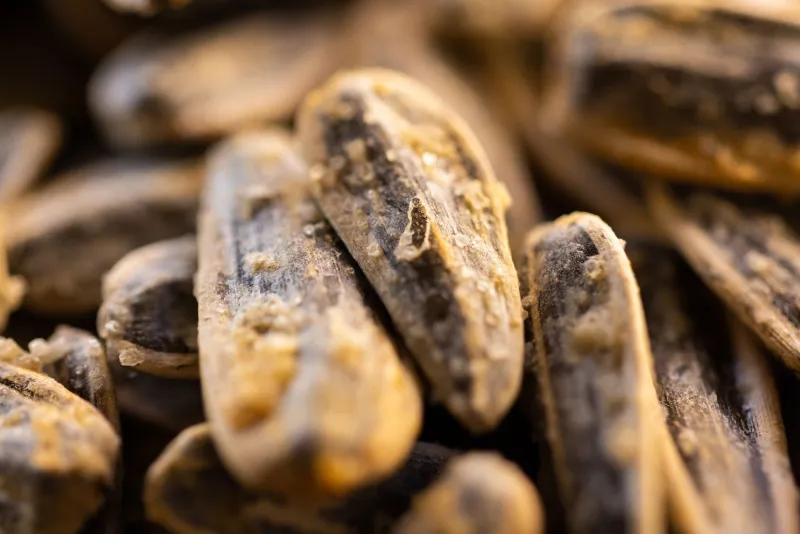
Let's set the scene. You're at a backyard barbecue somewhere in New Jersey, Houston, or maybe a third-floor apartment in Chicago. A Turkish teyze — someone's aunt, always someone's aunt — reaches into her oversized tote bag and produces a paper bag the size of a small pillow. She shakes it open. The smell hits before the sound does. Then comes the rhythmic, meditative crack-crack-crack that means only one thing: the real portion of the evening has officially begun.
For Turkish-Americans, çekirdek — roasted sunflower seeds, split open with the teeth and consumed at a pace that somehow defies logic — is less a snack and more a social ritual. It's a whole vibe. And if you've ever tried to explain this to your non-Turkish coworker, you already know how that conversation ends.
What Even Is the Big Deal?
Okay, yes, they're sunflower seeds. Americans eat those too — usually pre-shelled, shoveled into their mouths by the fistful at baseball games. But that's not what we're talking about. The Turkish çekirdek experience is something else entirely. You bite the shell lengthwise, use your tongue to extract the seed, and discard the husk — ideally into a neat pile, though the definition of "neat" is generous depending on the company. You do this hundreds of times over the course of a conversation, a TV show, or a three-hour family debate about nothing in particular.
The process is slow. Intentional. Almost ceremonial. And that's exactly the point.
In Turkey, çekirdek isn't about hunger. It's about being together. Street corners, park benches, balconies at dusk — wherever people gather to talk, seeds appear. It's the Turkish equivalent of the American habit of nursing a coffee just to have something to do with your hands during an awkward pause. Except çekirdek creates no awkward pauses. The cracking is the conversation.
When Çekirdek Crossed the Atlantic
Diaspora Turks brought a lot of things to the US — their recipes, their dramatic dizi habits, their deeply held opinions about who makes the best baklava. Çekirdek came along too, quietly tucked into the cultural baggage, and it has absolutely refused to assimilate.
You can find the good stuff at Turkish grocery stores, Middle Eastern markets, and increasingly at your local Trader Joe's (though purists will tell you that's not the same, and they're not wrong). Second and third-generation Turkish-Americans who grew up cracking seeds on their parents' living room floors still reach for a bag when they want to feel at home. It's muscle memory. It's comfort food that requires actual muscle.
And it has become, quietly and definitively, a marker of belonging.
Your Non-Turkish Friends Will Never Understand
Here's what happens when you introduce çekirdek to non-Turkish Americans: confusion, followed by polite concern, followed by a genuine attempt to participate that ends in either a chipped tooth or a seed shell swallowed whole.
They don't get the rhythm. They try to eat the shell. They ask why you don't just buy the pre-shelled kind, which — and this cannot be stressed enough — completely misses the point. The shelling is the point. The slow, repetitive, almost meditative act of cracking each seed is what makes it work. Take that away and you've just got a pile of tiny seeds and zero excuses to sit together for another two hours.
There's also the spitting. Americans, bless them, are not a spitting culture. The casual, practiced way a Turkish person deposits a seed shell onto a napkin or, in less formal settings, directly onto the floor, registers somewhere between "rude" and "alarming" on the American social scale. Meanwhile, every Turkish person in the room is completely unbothered.
TikTok Found the Çekirdek Frequency
Leave it to Gen Z to turn a 70-year-old snacking habit into content. Over the past couple of years, Turkish-American creators have been posting çekirdek videos with the kind of nonchalant pride that only comes from growing up slightly embarrassed about something and then suddenly, gloriously, not caring anymore.
The format varies. Some are ASMR-adjacent — the satisfying crack-crack-crack looped over lo-fi beats. Others are reaction videos: "I gave my roommate çekirdek and filmed what happened." (Spoiler: chaos. Always chaos.) A few creators have leaned into the "this is our love language" angle, posting videos of grandmothers pressing handfuls of seeds into palms like they're passing down ancient wisdom — which, honestly, they kind of are.
The comments sections on these videos are a whole ecosystem. Turkish diaspora kids flooding in with "MY FAMILY DOES THIS EXACT THING" energy, non-Turkish viewers genuinely curious, and at least one person per thread asking where to buy the good kind.
What It Means When Someone Hands You Seeds
If a Turkish person offers you çekirdek, accept it. This is not negotiable. That small gesture — the open hand, the shared bag tilted in your direction — is an invitation into something. It says: sit down, stay a while, you're welcome here. Refusing is technically allowed but socially noted.
For Turkish-Americans navigating life between two cultures, çekirdek carries a specific kind of weight. It's the thing you do when you're homesick but home is complicated. It's what comes out during long phone calls with cousins still in Istanbul, or during Sunday afternoon visits to your parents' place when the conversation has run out but nobody wants to leave yet.
It's a small, crunchy, slightly messy act of cultural continuity. And if your non-Turkish friends think you're weird for it, honestly? Let them. More seeds for you.
The Bottom Line
Çekirdek is not just a snack. It never was. It's a tempo, a ritual, a low-key declaration that says I know where I come from, and I'm not in a hurry to go anywhere. In a diaspora life that often moves fast and demands constant code-switching, there's something quietly radical about sitting down, pulling out a bag of seeds, and taking your time.
So next time someone hands you a handful — crack one open. Even badly. Even with the wrong teeth placement. The effort counts.
And if you need us, we'll be on the couch, three episodes deep into a dizi, with a very specific pile of shells forming on the coffee table.