Çarşı to Closet: The Turkish-American Creators Quietly Rewriting the Rules of US Style
American fashion has always been a remix. Denim from Genoa, sneaker culture from the Bronx, maximalism from every immigrant community that ever arrived with a suitcase full of something bold and beautiful and completely their own. So it shouldn't be surprising that Turkish-American creators are stepping into that tradition — but the speed and confidence with which they're doing it? That part is worth paying attention to.
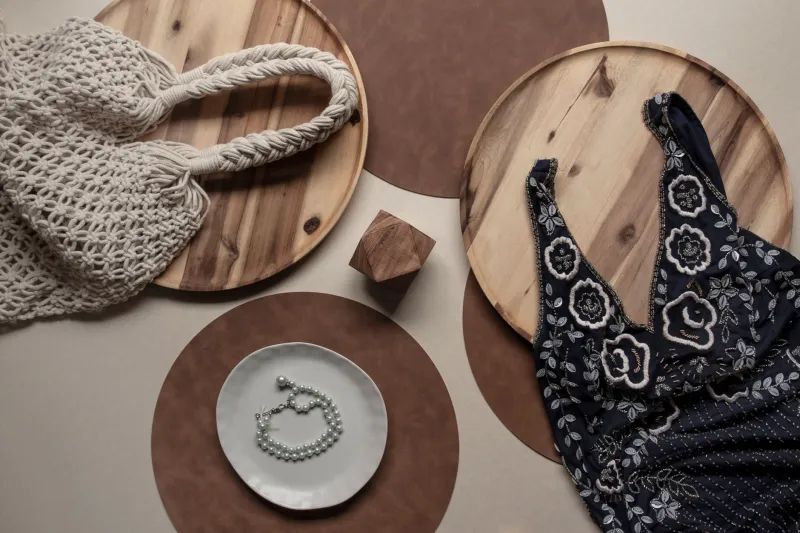
Scroll through Instagram or TikTok on any given afternoon and you'll find them: creators layering hand-embroidered kaftans over wide-leg trousers, styling kilim-inspired accessories with vintage Levi's, or building entire aesthetics around the kind of rich jewel tones and intricate pattern work that have been staples of Turkish textile culture for centuries. They're not treating their heritage as a costume or a trend moment. They're treating it as a design language — one they happen to speak fluently.
The Identity Question That Drives Everything
Ask any Turkish-American fashion creator about their aesthetic and the conversation almost always circles back to the same place: the exhausting, fascinating, ultimately generative experience of existing between two cultures.
"Growing up, I felt like I had to pick," says Selin, a 26-year-old content creator based in Los Angeles with a following that's grown steadily over the past two years. "At school, I dressed like everyone else. At home, or at family gatherings, there was this whole other visual world — the fabrics my mom brought back from Turkey, the gold jewelry, the way my aunts dressed. I spent years keeping those two worlds separate. Fashion was how I finally figured out how to put them together."
That synthesis — not assimilation, not strict cultural preservation, but genuine creative fusion — is what makes Turkish-American style voices stand out in a crowded influencer landscape. It's specific without being inaccessible. It's rooted without being nostalgic in a limiting way.
Modest Fashion and the Mainstream Conversation
One of the most significant contributions Turkish-American creators have made to US fashion discourse is within the modest fashion space. This is a conversation that's been happening globally for years, but it's taken longer to break through in mainstream American style media.
Creators who style modest looks — longer hemlines, layering, covered arms — and do so with genuine flair and intention have built some of the most engaged communities in the fashion influencer world. And a meaningful number of those creators bring Turkish cultural aesthetics into how they approach modest dressing: the flowing silhouettes, the emphasis on fabric quality, the comfort with color and ornamentation that doesn't read as maximalist excess but as considered elegance.
"Modest fashion in Turkey has its own long history, its own codes and references," notes Ayşe, a stylist and content creator in New York. "When I'm putting together a look, I'm not just thinking about coverage — I'm thinking about proportion, about what my grandmother would recognize as beautiful, about what works on a Tuesday in Manhattan. That's a specific design problem, and solving it is genuinely fun."
The audience for this content extends well beyond Turkish or Muslim communities. The engagement numbers suggest that people across demographics are responding to the craft and intentionality on display.
Kilims, Çini, and the Texture of Influence
Beyond modest fashion, Turkish aesthetic references are showing up in American style in subtler, broader ways — and Turkish-American creators are often the connective tissue.
The geometric boldness of kilim weaving patterns has been showing up in accessories, bags, and home-goods-as-fashion crossover content. Çini tile motifs — those intricate blue-and-white Iznik designs that cover the walls of mosques and historic buildings across Turkey — have influenced print work in everything from scarves to sneaker collabs. The layered, textile-rich aesthetic of the Grand Bazaar is having a moment in a US fashion culture that, after years of minimalism, seems genuinely hungry for more.
Turkish-American creators didn't manufacture this trend. But they've been its most articulate translators, providing context and cultural grounding that prevents the aesthetic from becoming just another Pinterest mood board stripped of meaning.
Building Community, Not Just Clout
What's notable about many of the Turkish-American fashion creators gaining traction right now is that they seem genuinely uninterested in chasing mainstream validation for its own sake. The communities they're building are tight, engaged, and culturally specific in ways that larger brand-friendly accounts often aren't.
Comment sections on their posts are full of second-generation kids recognizing something — a fabric, a styling choice, a reference — that they didn't expect to see reflected back at them on an American platform. That recognition is powerful, and it's translating into loyalty that brands are starting to notice.
"I get DMs from Turkish-American girls in the Midwest, in Texas, in places where there isn't a big Turkish community, telling me they feel seen," says Selin. "That means more to me than any brand deal. Though the brand deals are nice too."
She laughs. Fair enough.
What "American" Fashion Actually Looks Like Now
Here's the thing about American style in 2024: it has never been one thing, and the creators who understand that are the ones building something durable. Turkish-American fashion voices are part of a broader shift in which diaspora communities are no longer waiting for mainstream fashion media to notice them — they're creating the media themselves, setting the terms, and letting audiences find them.
The çarşı — the bazaar, the marketplace, the place where culture and commerce and craft have always intersected — has always been a space of creative exchange. Turkish-American creators are just extending that tradition into a new medium, on a new continent.
And honestly? The fits are incredible. Follow accordingly.