From Grandma's Kitchen to Your FYP: The TikTok Takeover of Turkish Coffee Fortune Telling
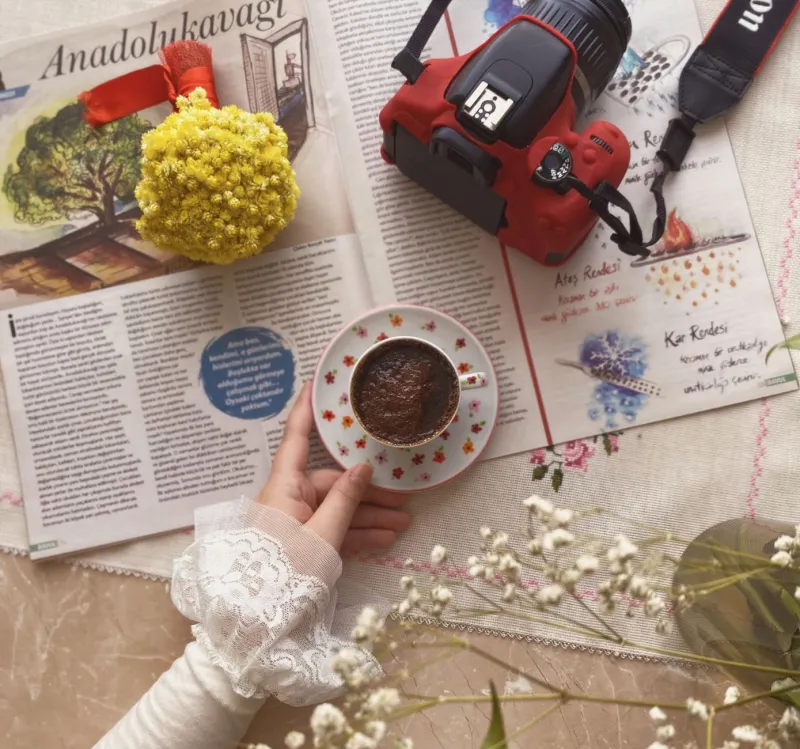
Your Fyp Just Got a Lot More Mystical
If you've spent any time on TikTok lately, you've probably stumbled across it: a pair of hands turning a small ceramic cup upside down, dramatic music playing in the background, and a voice whispering something like, "Okay, the fish symbol means big changes are coming for you." Comments flood in. People are tagging their friends. Someone in the replies is crying. Welcome to the world of tasseography — or as Turkish families have just always called it, kahve falı.
Turkish coffee fortune telling has been around for centuries. Long before anyone was doom-scrolling, grandmothers across Istanbul, Ankara, Izmir, and every little village in between were flipping cups, waiting for the grounds to dry, and delivering readings that ranged from "you'll meet a stranger" to "stop worrying about that guy, he's not worth it." It was never really about predicting the future. It was about sitting down, slowing down, and talking.
But now it's gone viral. And honestly? We're here for it.
Why TikTok and Tasseography Are a Perfect Match
There's something about the format that just works. A Turkish coffee reading is inherently visual — the dried grounds leave behind shapes, lines, and symbols that look different to every eye. The cup becomes a kind of Rorschach test with cultural weight. On a platform built around short, visually compelling storytelling, it's basically a cheat code for engagement.
Creators like New Jersey-based Elif K., who posts under the handle @turkishcoffeevibes, started sharing readings during the pandemic as a way to connect with her Turkish-American followers. She didn't expect much. "I filmed my mom reading my aunt's cup one Sunday afternoon," she told us. "It got 200,000 views in three days. I genuinely couldn't understand why, and then I realized — people are hungry for this kind of intimacy. It's slow. It's human. It's the opposite of everything else on the app."
She's not wrong. In a feed full of rapid-fire content, a cup reading demands patience. You have to watch the grounds settle. You have to listen. And when the reader pauses and says, "There's a bird near the rim — that usually means news is coming," something in people's chests tightens just a little. Even skeptics lean in.
The Cultural Weight Behind the Cup
For the Turkish diaspora in the US, these videos hit differently. They're not just entertainment — they're memory. The smell of Turkish coffee, the weight of a fincan in your hand, the sound of your teyze (aunt) sucking her teeth before delivering some uncomfortably accurate life advice — it all comes rushing back in a two-minute clip.
Tasseography isn't uniquely Turkish; versions of it exist across Greek, Middle Eastern, and Eastern European cultures. But the Turkish practice has its own distinct character. The coffee itself matters — it has to be proper Turkish coffee, boiled in a cezve with no filter, leaving those thick grounds behind. The cup is turned onto the saucer, sometimes a wish is made, and you wait. The reading only begins when the cup has cooled completely. There's no rushing it.
Diaspora creators are quick to point out that the practice carries real emotional significance. "My grandmother read cups every single week," says Chicago-based content creator Deniz A., who runs a lifestyle channel blending Turkish food, language, and tradition. "When I do it on camera, I feel like I'm keeping something alive. It's not just content. It's connection."
So What Do the Symbols Actually Mean?
Here's where it gets fun — and a little wild. There's no single definitive dictionary of coffee ground symbols. Interpretations vary by region, by family, and honestly, by vibe. But there are some commonly agreed-upon meanings that most readers work with:
- A bird near the rim: News is coming, usually good, sometimes unexpected.
- A snake: Watch your back — someone around you may not have the best intentions.
- A fish: Abundance, luck, or a significant change in your circumstances.
- A heart: Love, obviously. But context matters — a broken or lopsided heart shape tells a different story.
- Mountains or triangles: Obstacles ahead, but also strength to overcome them.
- A road or path (a clear line through the grounds): A journey, literal or metaphorical.
- Dots scattered throughout: Money, small blessings, or a period of busy-ness.
- A letter or initial: Someone whose name starts with that letter is significant to you right now.
The saucer matters too. If grounds fall onto it, that's typically read as tears, or alternatively, emotional release — something leaving your life.
A Beginner's Guide to Reading Your Own Cup
Ready to try it yourself? Here's how to do it the right way.
Step 1: Make actual Turkish coffee. None of this instant stuff. You need finely ground Turkish coffee, a cezve, water, and sugar if you want it. Bring it to a boil slowly, let the foam rise, pour it into a small cup. Do not stir after pouring.
Step 2: Drink it slowly. Enjoy it. That's the point. Leave a small amount of liquid at the bottom — don't drink the grounds.
Step 3: Make a wish (optional but encouraged). Think about something you genuinely want clarity on. Hold that thought.
Step 4: Flip the cup. Place the saucer on top of the cup and flip it upside down in one smooth motion. Some people place a coin on the bottom of the cup for luck. Let it sit for at least 10-15 minutes until it's completely cool.
Step 5: Open and observe. Lift the cup carefully. Look at the inside first — that's your present and near future. The grounds near the handle represent you and your home life. The opposite side represents outside influences.
Step 6: Don't force it. The best readings happen when you let your eyes relax and see what appears naturally. Squinting and trying to find a specific shape usually just gives you a headache.
The Science-ish Bit (We're Not Ignoring It)
Look, we're not here to tell you that dried coffee grounds can literally predict your future. What we can say is that there's genuine psychological value in the practice. Tasseography functions similarly to other projective techniques — like the Rorschach inkblot test — where ambiguous images prompt personal reflection. What you see in the cup often says something real about what's on your mind. The reading becomes a conversation starter, a way to articulate anxieties and hopes you hadn't quite put into words yet.
Whether or not the bird near the rim means news is coming, the act of sitting quietly, reflecting, and talking about your life with someone you trust? That's genuinely good for you.
The Diaspora Keeps It Real
What makes the TikTok wave of tasseography feel different from cultural appropriation or trend-chasing is who's leading it. The creators driving these videos are overwhelmingly Turkish, Turkish-American, or from communities where this practice has real roots. They're not selling mysticism — they're sharing heritage.
And for a generation of Turkish-Americans who maybe grew up feeling like their culture was too niche, too foreign, too hard to explain to their American friends — watching a coffee cup reading hit a million views feels like something. Validation, maybe. Or just the simple, quiet joy of seeing your grandmother's Sunday ritual trend worldwide.
Sip slow. Flip the cup. See what the grounds have to say.