Everybody Wants Ayran Now and Honestly We Have Feelings About It
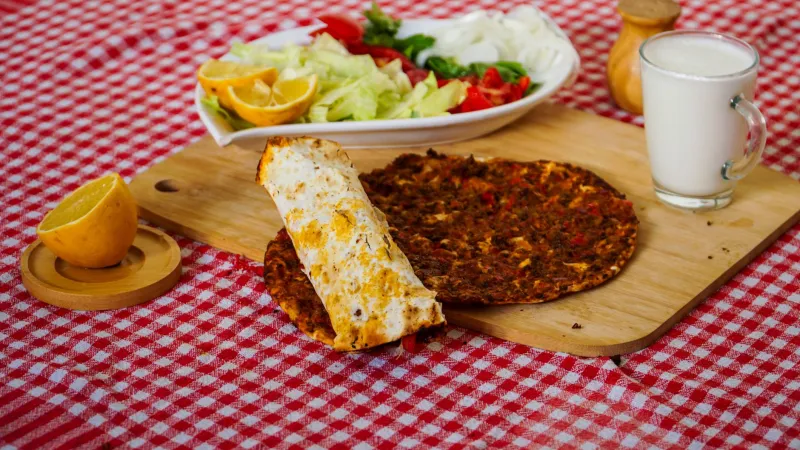
Somewhere between a Brooklyn smoothie bar adding "salted yogurt drink" to its menu for $9 and a TikTok wellness influencer calling ayran "the probiotic hack Big Pharma doesn't want you to know about," Turkish-Americans across the country collectively experienced a very particular emotion. It's not quite anger. It's not quite joy. It sits somewhere in the chest, warm and slightly sour, a lot like the drink itself.
Welcome to the ayran moment. We've been waiting for this, and now that it's here, we're not entirely sure how to feel.
From the Back of the Fridge to the Front of the Feed
For anyone who grew up in a Turkish household in the US, ayran was just there. It was the thing your anne pulled out of the fridge next to the leftover köfte. It was what you drank at the Turkish restaurant on Route 9 in New Jersey while your American friends made a face at the foam. It was the beverage equivalent of a secret handshake — unremarkable to you, completely alien to everyone else at the lunch table.
Then something shifted. Food media started noticing that yogurt-based drinks were having a global moment. Kefir got trendy. Lassi earned its place on upscale menus. Gut health became the personality trait of an entire generation of wellness content creators. And suddenly, ayran — that simple, ancient blend of yogurt, water, and salt — was being "discovered."
Search interest in ayran has climbed steadily over the past two years in the United States. Specialty grocery chains that once stocked it in a dusty corner of the international aisle are now featuring it near the kombucha. Brands that were previously invisible to non-Turkish consumers are showing up on shelves in cities like Austin, Chicago, and Los Angeles. One major Turkish dairy brand reportedly saw US export inquiries triple in a single quarter last year.
This is, objectively, good news. And yet.
The Economics of Authenticity
Here's where it gets complicated, and Turkish-Americans understand this tension intimately: there is a real difference between a food being appreciated and a food being appropriated, repackaged, and sold back to you at a markup with the cultural context quietly stripped out.
When an influencer posts a reel about "this incredible Turkish probiotic drink" while mispronouncing it three different ways and crediting its invention to "ancient Anatolian nomads" as if that's the entirety of what Turkey is, something gets lost. The history, the specificity, the fact that your büyükanne made this from scratch every single summer — none of that fits in a 30-second clip with lo-fi music underneath it.
And then there's the price point issue. At a Turkish market, a tall bottle of Sütaş or Içim ayran might run you $2. At a trendy health food spot rebranding it as "cultured yogurt water," that same concept costs $7.50 and comes in a glass bottle with a minimalist label. Turkish-Americans who have been buying this stuff for decades are watching the markup happen in real time, and the frustration is legitimate.
"My mom used to make it at home because it was cheap and easy," one member of a Turkish-American Facebook group wrote recently, in a thread that racked up hundreds of replies. "Now I'm seeing it described as a 'luxury wellness beverage.' I don't know whether to laugh or cry."
The answer, based on the replies, was mostly both.
Pride Is Complicated When You've Been the Weird Kid
There's another layer here that doesn't get talked about enough, which is the specific experience of growing up Turkish in America and having your food be the weird thing. The thing people wrinkled their noses at. The thing you maybe didn't mention at school because explaining it was exhausting.
A lot of Turkish-Americans spent years quietly assimilating their food habits in public while keeping them fiercely intact at home. You learned which restaurants your non-Turkish friends would actually agree to go to. You stopped bringing certain things for lunch after the third time someone asked "what's that smell." You developed a whole internal calculus around when and how to share your culture versus when to just let it go.
So when that same culture suddenly becomes cool? The feelings are layered. There's genuine pride — yes, this drink is incredible, we've been telling you for decades, welcome. There's also a very understandable wariness about whether the appreciation is real or whether it's just trend-chasing. And underneath both of those is something quieter: a wish that it could have been cool when you needed it to be, back when you were twelve and just wanted to eat your lunch without commentary.
What Turkish-Americans Actually Want
To be clear, nobody serious is arguing that ayran should be kept secret or that non-Turks shouldn't drink it. That's not the point and it was never the point. The point is credit. Context. Accuracy.
When a food goes mainstream, the story of where it comes from has a habit of getting fuzzy. "Mediterranean" becomes a catch-all that erases specific cultures. "Ancient recipe" gets attached to things that have living, breathing communities behind them who are still making it today. Turkish-Americans are not a footnote in the ayran origin story — they are the story, and so are the people still in Turkey who have been producing and drinking this for generations.
What would actually feel good? Hearing the word "Turkish" in the same sentence as the drink, every time. Seeing Turkish-owned brands get the shelf space and the press coverage. Having the cultural context included rather than edited out for the sake of a cleaner brand narrative. None of this is a radical ask.
The Foam Stays
One thing is non-negotiable, and Turkish-Americans are pretty unified on this: the foam is not a mistake. The foam is not something to be engineered out of the product to make it more palatable for consumers who find it off-putting. The foam is the point. It is a feature, not a bug, and any version of ayran that tries to eliminate it in the name of mainstream appeal has already lost the plot.
This is maybe the clearest metaphor for the whole conversation. Authenticity isn't just about the ingredient list. It's about not sanding down the parts that feel unfamiliar until you've got something that no longer resembles what it was.
Ayran is salty and tangy and slightly frothy and it is perfect. It has been perfect for a very long time, in kitchens and at kitchen tables and at roadside stops across Turkey and in Turkish homes all over New Jersey and California and everywhere in between.
You can have some. Just know where it came from.